 English
  日本語
日本語  한국어
한국어  Deutsch
  Español
  italiano
  русский
  português
  العربية
  ไทย
ไทย  tiếng việt
  中文
中文

NEWS

BKN eddy current testing machines provide non-destructive inspection for tubes, bars, and wires, detecting surface defects, cracks, and material inconsistencies while supporting high-speed production, automation, customization, and reliable industrial quality control.
In modern manufacturing, ensuring the quality of metal tubes, bars, and wires is essential for safety, reliability, and production efficiency. Small surface defects, cracks, material inconsistencies, and dimensional variations can affect the performance of finished products. To identify these issues without damaging components, manufacturers increasingly rely on eddy current testing equipment.
An eddy current machine uses electromagnetic induction to detect defects in conductive materials. It is widely used in industries such as automotive manufacturing, aerospace, energy, metal processing, and precision engineering.
For companies searching for an eddy current machine for sale, understanding the technology, applications, and equipment selection criteria is essential.
BKN provides industrial inspection solutions including eddy current tube testing equipment, bar inspection systems, wire inspection systems, and customized NDT solutions designed for different production environments.
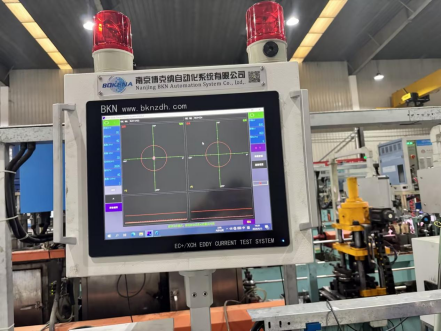
An eddy current testing machine is a type of non-destructive testing (NDT) equipment that uses electromagnetic fields to detect defects in electrically conductive materials.
The principle is based on electromagnetic induction. A probe containing a coil generates an alternating magnetic field. When the probe is placed near a conductive material, electrical currents—known as eddy currents—are generated inside the material.
If the material contains a crack, void, change in conductivity, or structural variation, the eddy current pattern changes. The testing system analyzes these changes and identifies possible defects.
According to the electromagnetic testing principles described by the American Society for Nondestructive Testing (ASNT), eddy current inspection is widely applied for detecting surface and near-surface discontinuities in conductive materials.
Compared with destructive testing methods, eddy current technology allows manufacturers to inspect large quantities of products while maintaining production efficiency.
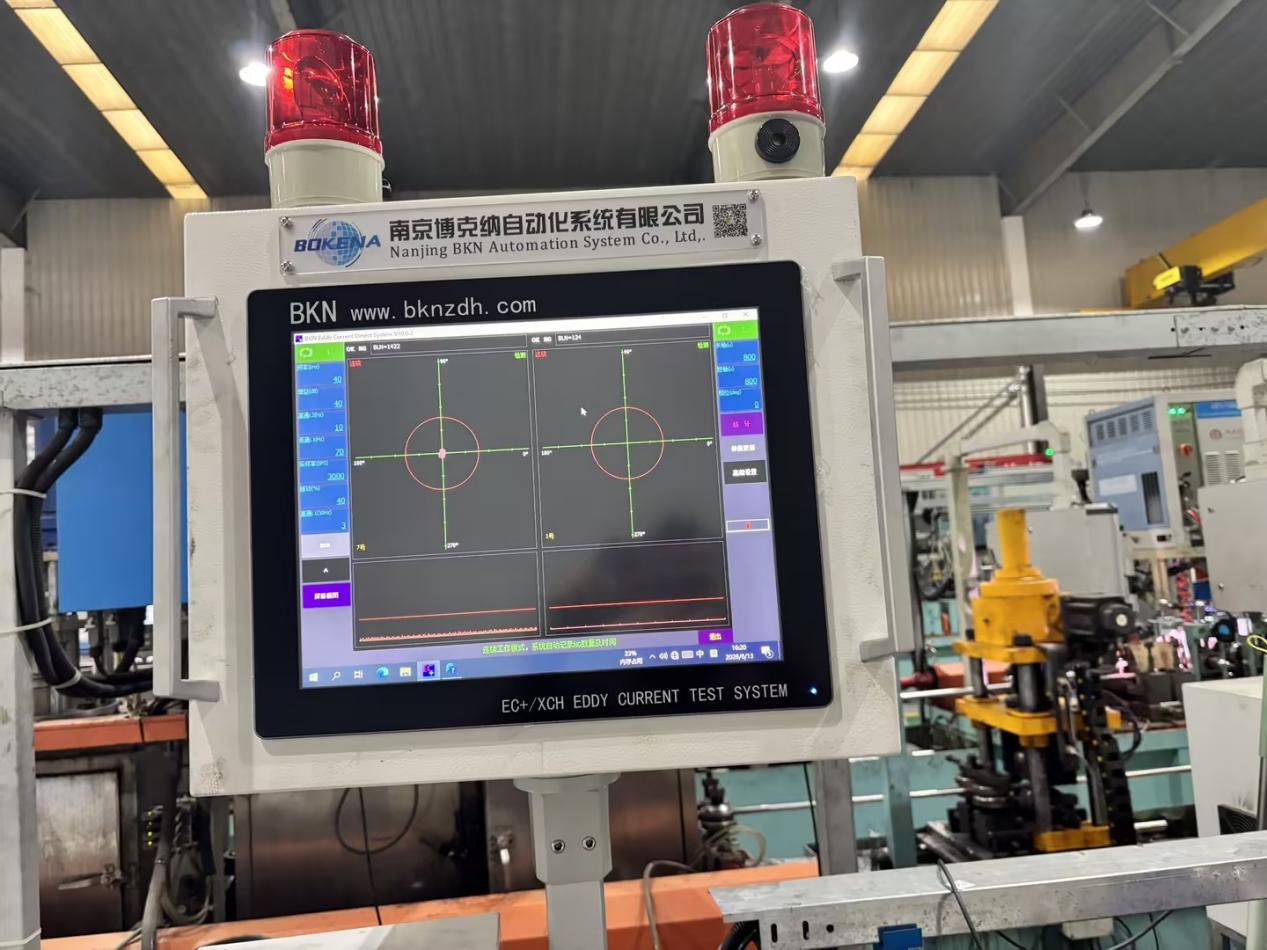
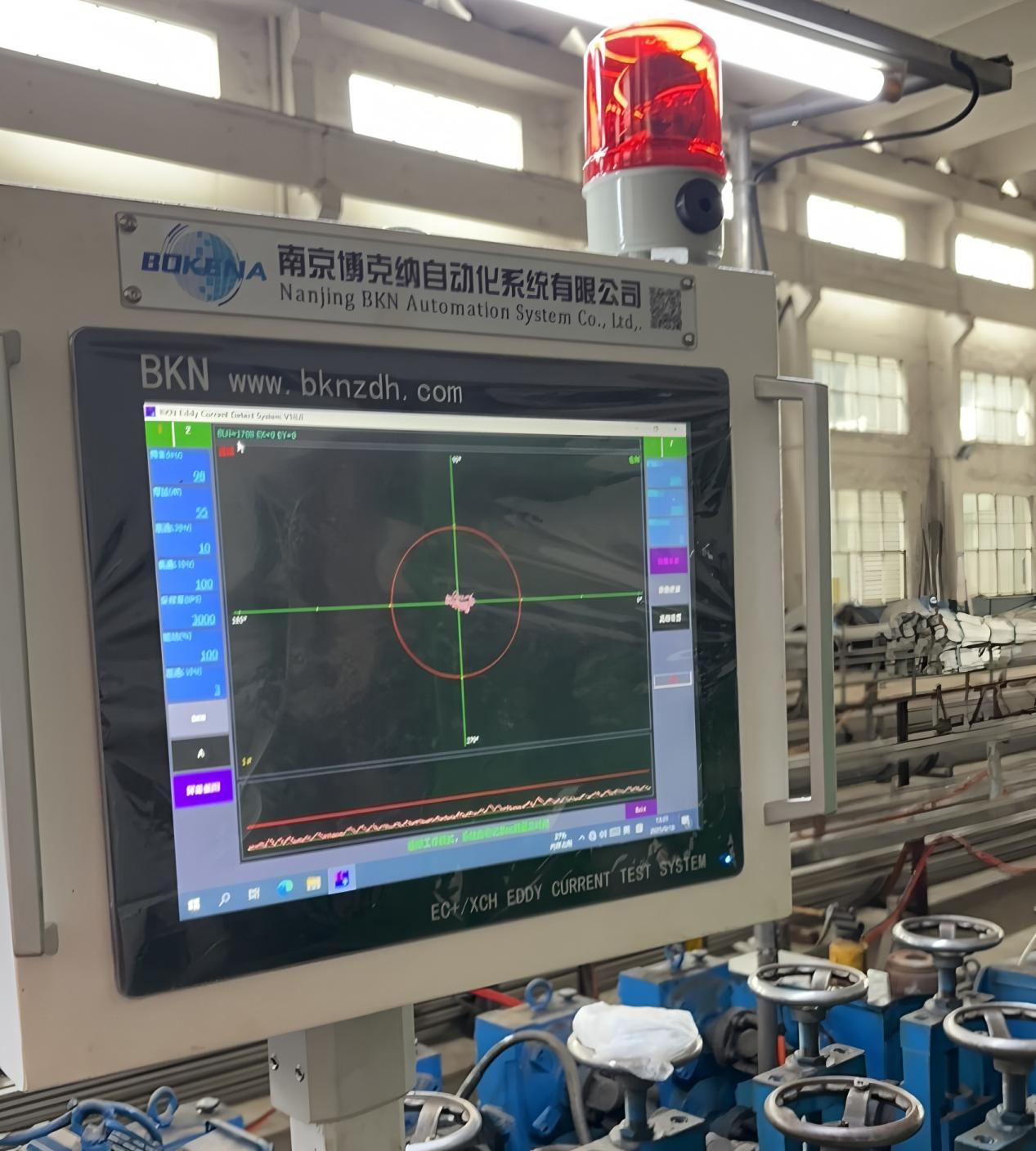
Metal tubes are commonly used in industries where reliability is critical, including heat exchangers, automotive components, oil and gas systems, and power generation equipment.
Eddy current tube testing equipment is designed specifically for inspecting tubular products at high speed.
Eddy current tube systems can detect:
Surface cracks
Seam defects
Manufacturing flaws
Material inconsistencies
Heat treatment variations
Corrosion-related damage
During production, tubes can pass through inspection coils or probes while the system continuously monitors signals. This enables manufacturers to identify defective products before shipment.
BKN’s tube inspection solutions are designed for applications requiring reliable inspection of different tube sizes and production speeds.
International Atomic Energy Agency (IAEA) explains that eddy current testing is commonly used for inspection of tubes, heat exchanger components, and conductive materials where surface-related defects must be identified.
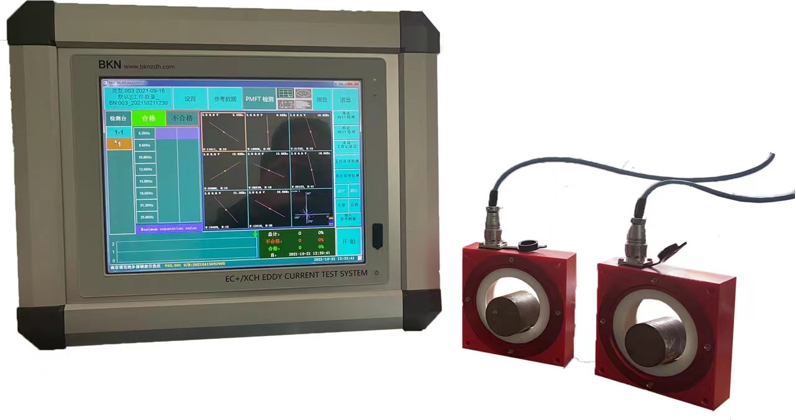
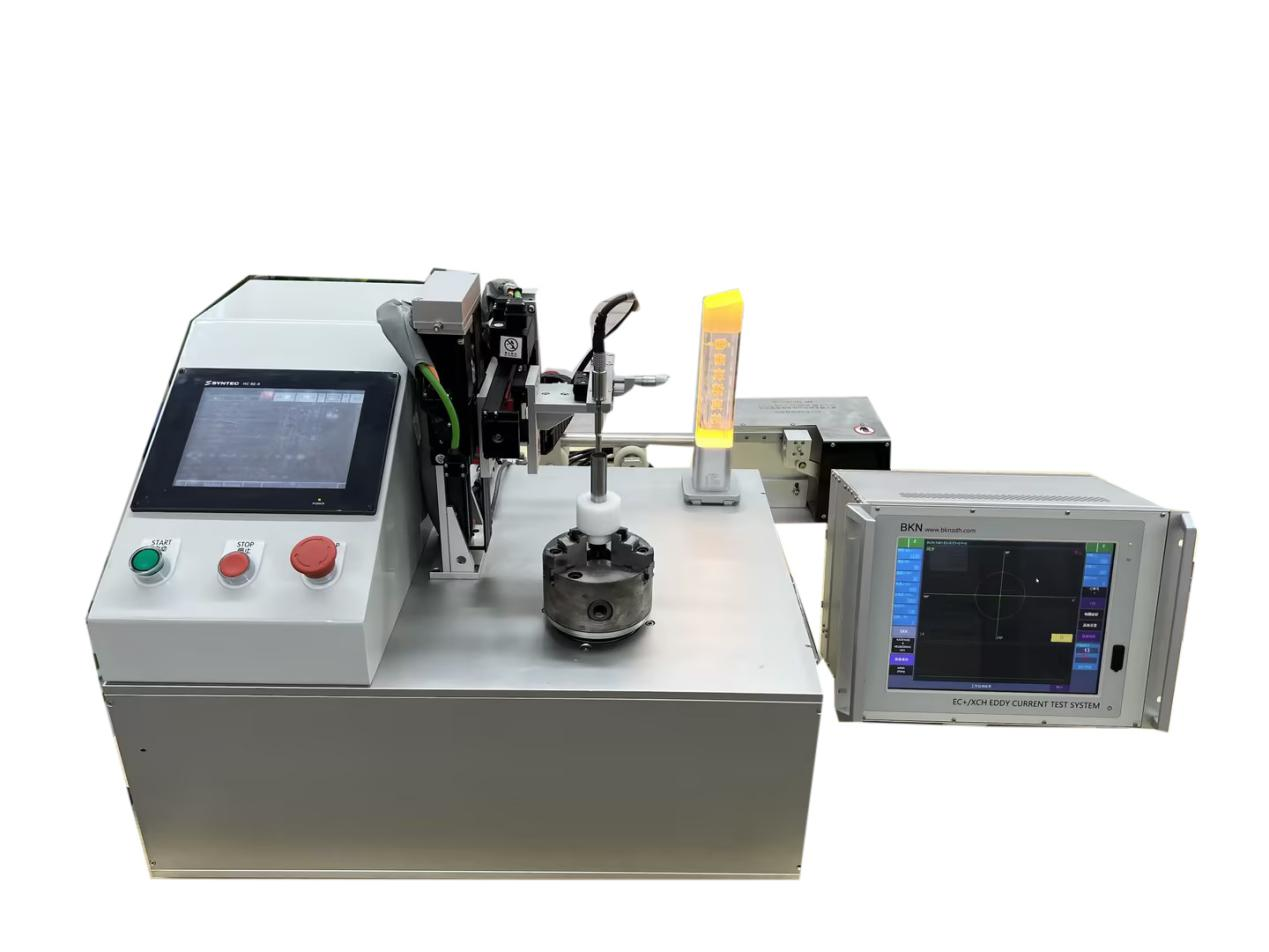
Besides tubes, eddy current technology is also widely used for metal bars and wires.
Manufacturers producing steel bars, copper wires, aluminum products, and precision metal components often require continuous inspection during production.
An eddy current machine for bar and wire applications can help identify defects without interrupting manufacturing operations.
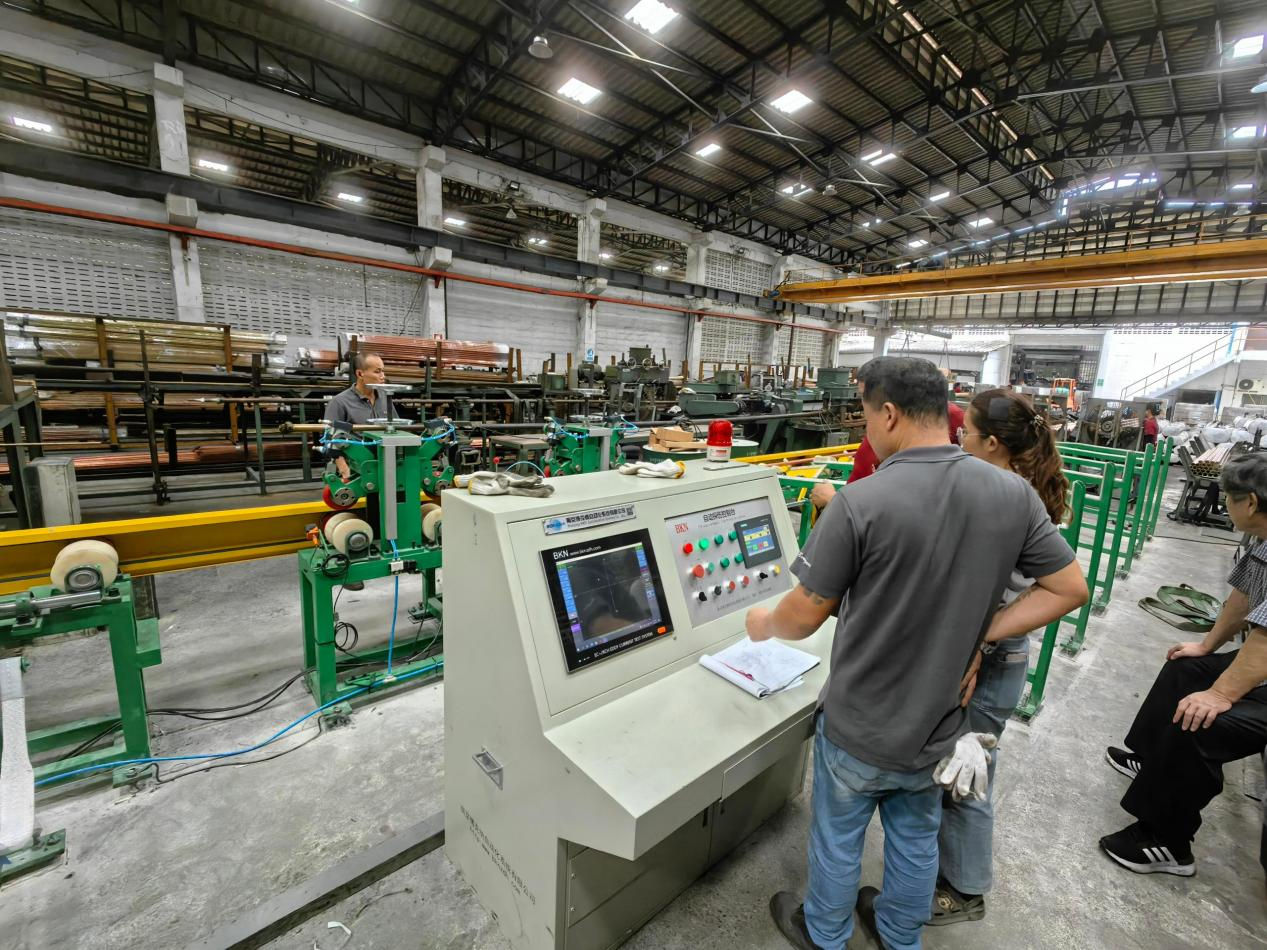
Production lines often operate continuously. Eddy current systems can inspect materials at high speeds, making them suitable for large-volume manufacturing.
Many eddy current inspection systems can operate without direct contact between the sensor and the material surface, reducing mechanical wear.
With appropriate probe design and settings, eddy current inspection can detect very small surface discontinuities.
Modern systems can integrate inspection results with production control systems, allowing automatic sorting and quality management.
When comparing eddy current equipment for sale, buyers should evaluate more than the initial purchase cost.
The right system depends on material type, product dimensions, inspection requirements, and production conditions.
Selection Factor | Considerations |
Material | Steel, copper, aluminum, and other conductive materials |
Product shape | Tube, bar, wire, rod, or customized components |
Inspection speed | Production line speed and throughput requirements |
Defect type | Surface cracks, seams, conductivity changes |
Testing method | Coil inspection, probe inspection, or customized design |
Automation level | Manual, semi-automatic, or fully integrated systems |
Data management | Signal recording, reporting, and quality tracking |
For manufacturers comparing an eddy current testing machine price, these technical requirements often influence the final investment more than the machine itself.
Many buyers search online for eddy current testing equipment price.
However, the cost of an eddy current system depends on multiple factors.
Basic inspection instruments may have lower costs, while complete production-line systems with automatic feeding, sorting, and data analysis functions require higher investment.
A system designed for simple defect detection may differ significantly from a customized solution for aerospace or energy applications.
Tube diameter, bar size, and wire thickness affect probe design and machine configuration.
Options such as:
Multi-frequency testing
Automatic defect marking
Data storage
Remote monitoring
Integration with production lines
can influence the overall price.
Therefore, companies should evaluate total inspection capability instead of choosing equipment based only on the lowest eddy current machine price.
NIST highlights the importance of measurement reliability and calibration when evaluating advanced inspection and measurement systems.
Eddy current systems belong to the broader category of electromagnetic testing equipment.
Other electromagnetic inspection methods may include magnetic flux leakage (MFL), magnetic particle testing, and related technologies.
The selection depends on:
Material properties
Defect location
Inspection speed
Required sensitivity
Component geometry
For example, eddy current inspection is particularly suitable for conductive materials and surface-related defects, while other electromagnetic methods may be better suited for different applications.
Companies evaluating eddy current inspection equipment should select technology according to actual inspection requirements.
Selecting the right supplier is an important part of building an effective inspection system.
BKN specializes in industrial NDT solutions and provides eddy current equipment, including systems for tubes, bars, wires, bearing ring and rollers, steel ball, auto parts.
The company focuses on:
Industrial inspection applications
Customized testing solutions
Reliable NDT instruments
Production-line integration
Probe customization
NDT Software and hardness R&D and production with strong technical team
BKN Also provide very fast response before and after sales service.
For manufacturers searching for an eddy current testing instrument, BKN offers solutions designed to support quality control in demanding industrial environments.
Proper operation helps maintain inspection accuracy and equipment performance.
Recommended practices include:
Reference standards should be checked regularly to ensure reliable inspection sensitivity.
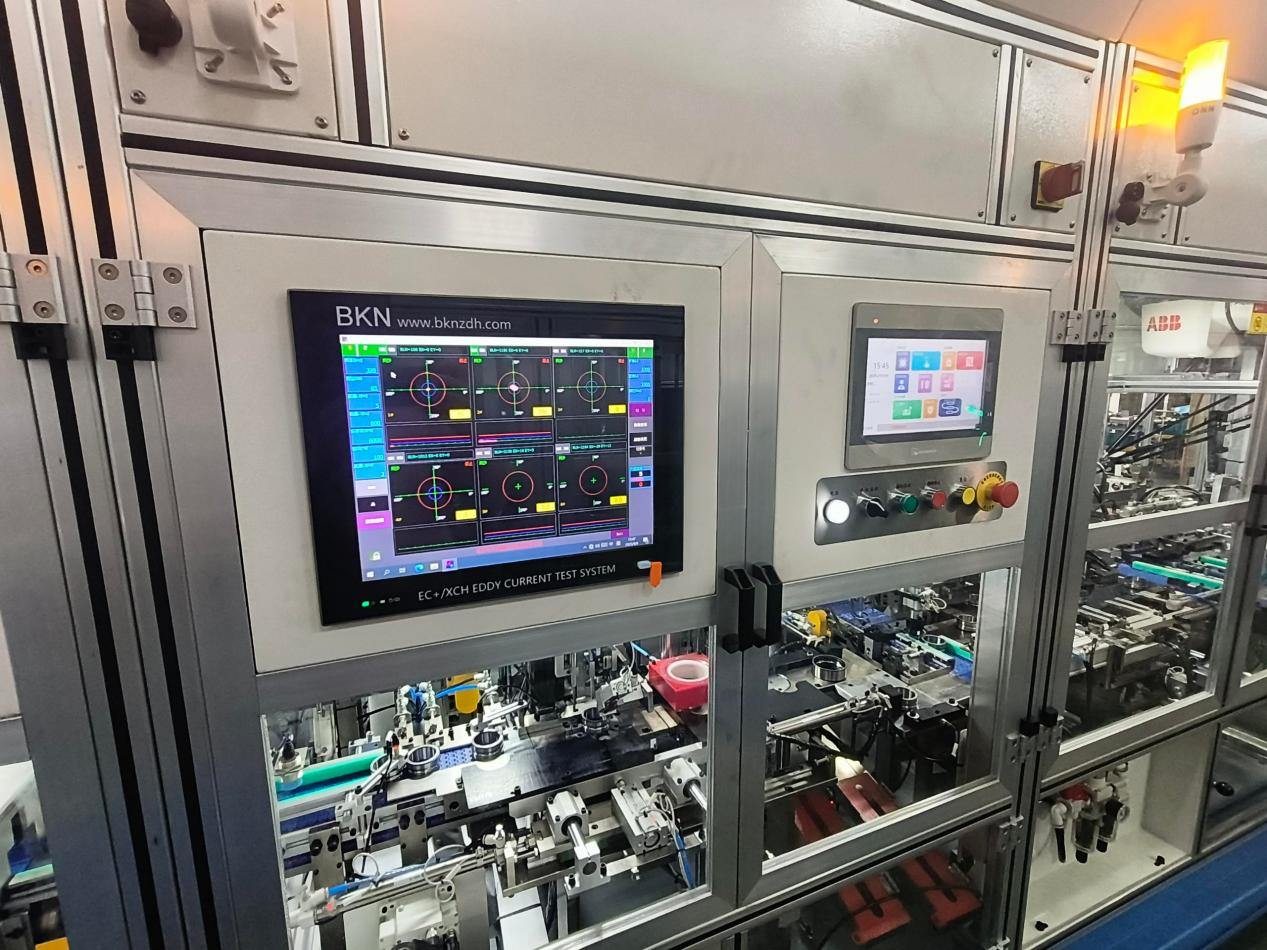
The probe design should match the product geometry and inspection objective.
Operators should review inspection signals and maintain inspection records.
Routine maintenance reduces downtime and extends equipment service life.
An eddy current testing machine is an NDT device that uses electromagnetic induction to detect defects in conductive materials without damaging the inspected component.
Eddy current systems can inspect conductive materials such as steel, stainless steel, copper, aluminum, and other metal products.
Eddy current tube testing equipment is mainly used to detect cracks, seams, and surface defects in metal tubes used in industrial applications.
The eddy current testing machine price depends on system configuration, automation level, inspection requirements, and product specifications.
Major factors include machine size, inspection speed, probe design, software functions, automation options, and customization requirements.
Choose suppliers with NDT experience, technical support capabilities, customization options, and solutions suitable for your specific production process.
An eddy current machine is an important tool for modern industrial quality control, especially for manufacturers producing tubes, bars, and wires. By providing fast, non-destructive inspection, these systems help detect defects while maintaining production efficiency.
When evaluating an eddy current machine for sale, companies should consider inspection requirements, product characteristics, automation needs, and long-term reliability rather than focusing only on equipment cost.
With expertise in NDT technology, BKN provides advanced eddy current testing equipment, helping manufacturers improve inspection accuracy and maintain consistent product quality.


