English
  日本語
日本語  한국어
한국어  Deutsch
  Español
  italiano
  русский
  português
  العربية
  ไทย
ไทย  tiếng việt
  中文
中文

NEWS

BKN eddy current testing machines provide non-destructive inspection for tubes, bars, and wires, detecting surface defects, cracks, and material inconsistencies while supporting high-speed production, automation, customization, and reliable industrial quality control.
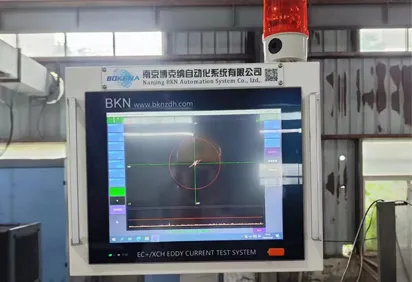
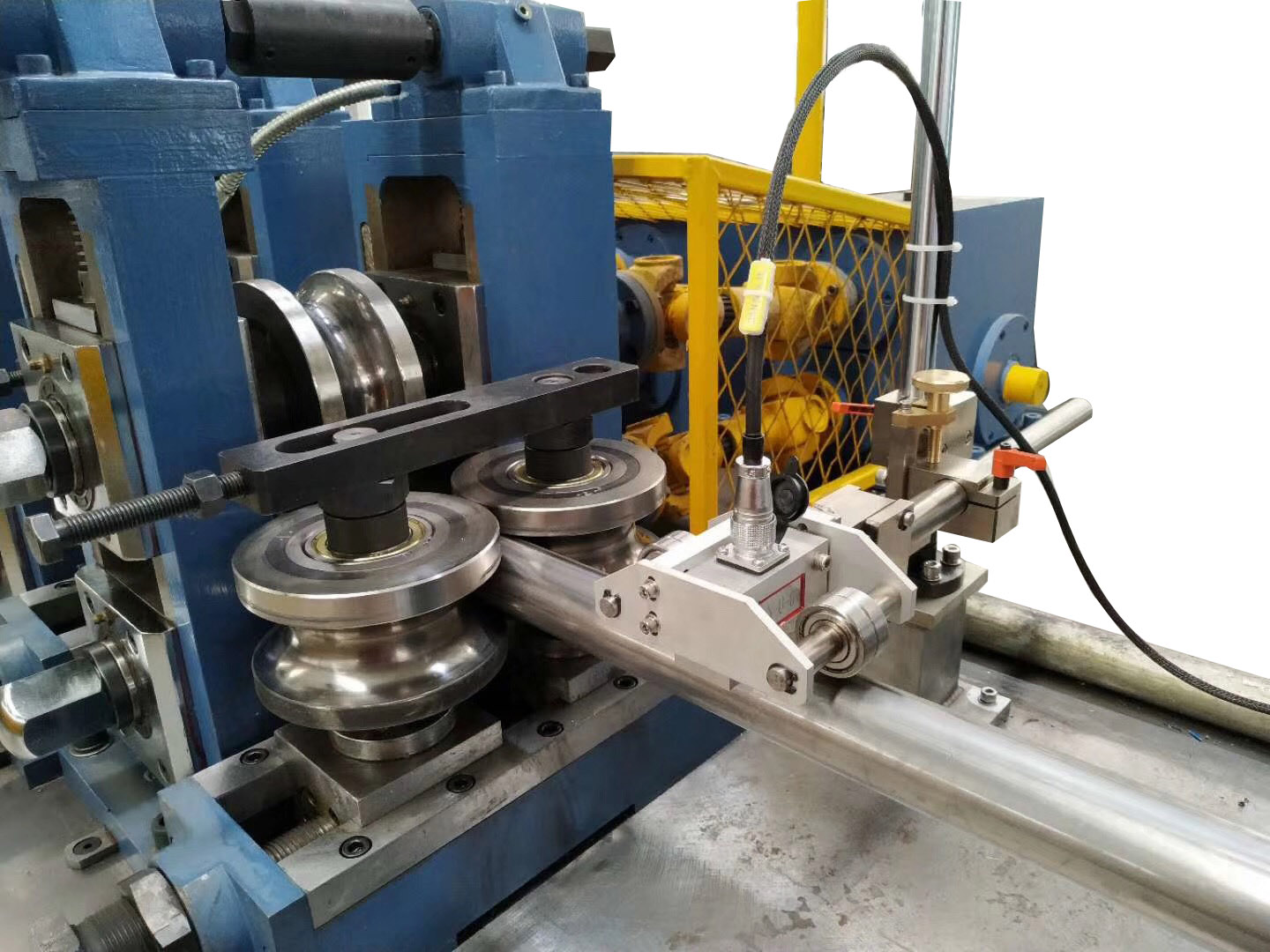
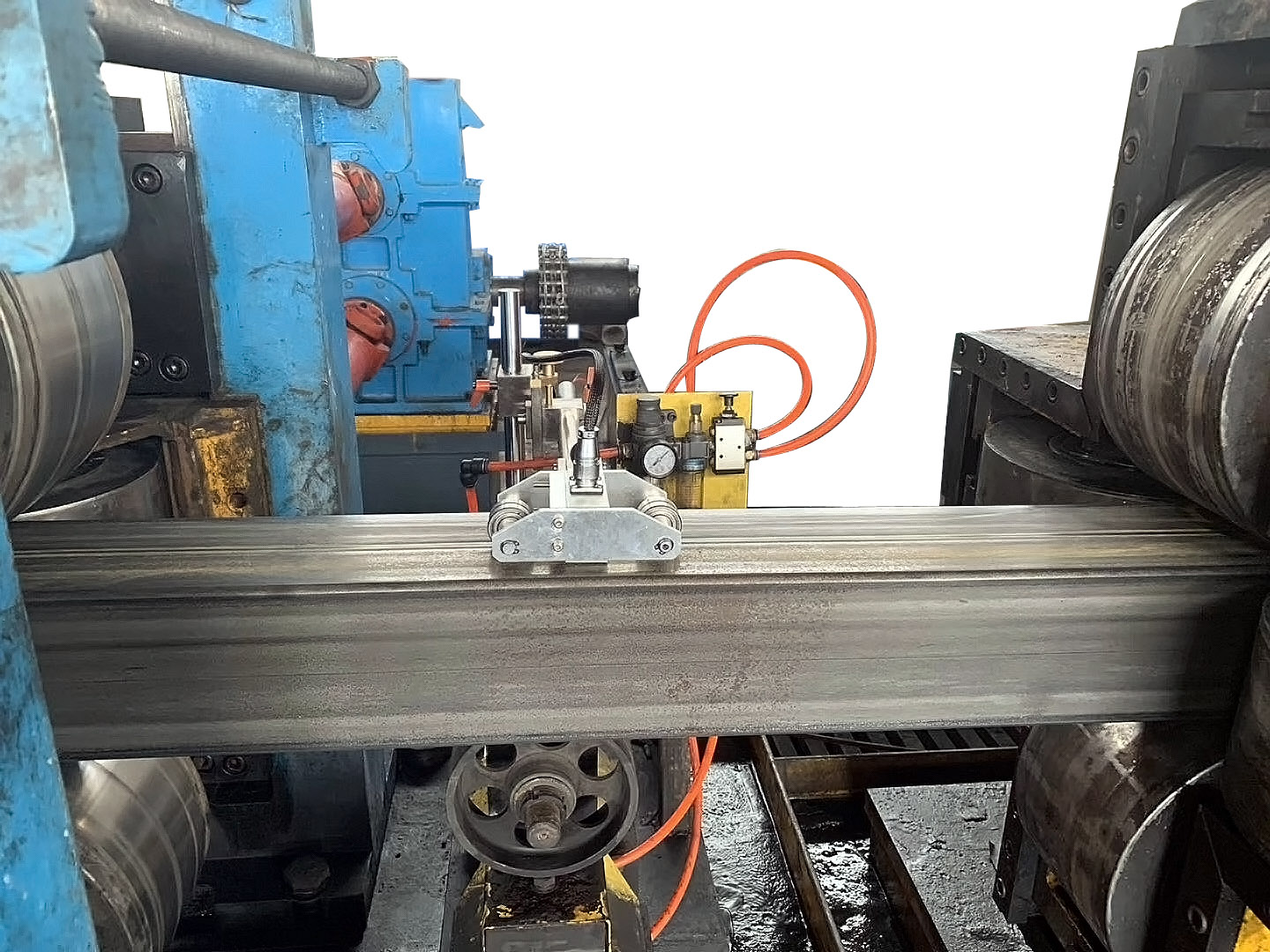
BKN’s ERW pipe eddy current testing system supports inline and offline inspection of electrically conductive welded pipes. Depending on the required inspection scope, the system can use a saddle-shaped probe for targeted weld-seam inspection or an encircling coil for full-body pipe inspection.
The correct configuration depends on the pipe material, outside diameter, wall thickness, weld position, expected discontinuity orientation, production speed and applicable inspection standard. Probe alignment, lift-off control and reference-sample calibration are important for obtaining consistent signals.
| Inspection Scope | Probe or Coil | When to Use | Setup Note |
|---|---|---|---|
| Weld seam only | Saddle-shaped probe | Used when the weld position is known and the inspection needs to focus on the welded area. | The center of the probe should be aligned with the weld seam. Probe compatibility depends on the pipe diameter range and fixture design. |
| Full pipe body | Encircling coil | Used when inspection coverage is required around the pipe circumference rather than only at the weld seam. | The coil and guide bushes must match the outside diameter of the pipe and may need to be changed when the pipe size changes. |
The two configurations serve different inspection objectives. A saddle-shaped probe should not be presented as full-body inspection, and an encircling coil should not be described as weld-seam-only inspection.
The probe or encircling coil generates an alternating electromagnetic field. When the ERW pipe passes through the inspection area, eddy currents are induced in the conductive material.
Changes in the weld area, pipe surface, material condition, geometry or probe position can alter the eddy current response. The system processes these signal changes and compares them with the configured inspection thresholds and reference signals.
A typical inspection sequence includes:
Confirming the pipe material, dimensions and inspection scope.
Selecting the saddle-shaped probe or encircling coil.
Aligning and positioning the sensing unit.
Calibrating the system with an appropriate reference sample.
Running the pipe through the inline or offline inspection station.
Processing and evaluating signal changes.
Triggering the configured alarm or marking action when the signal exceeds the established threshold.
Visual, audible or spray-marking outputs should only be listed when they are included in the confirmed system configuration.
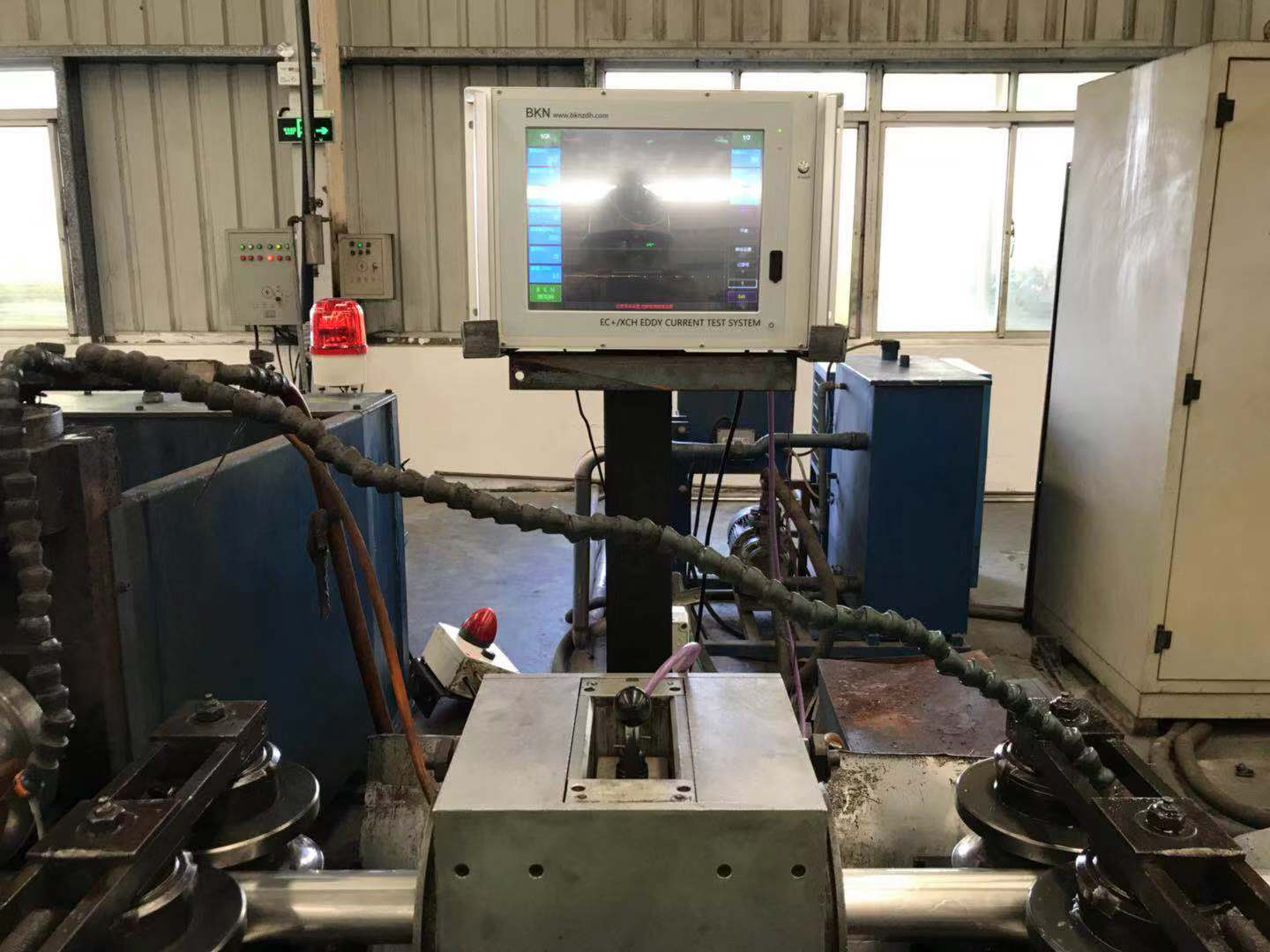
Inline inspection integrates the eddy current system with the pipe production line. The probe or coil, guide mechanism, signal-processing unit and alarm or marking equipment must be coordinated with the production speed and pipe movement.
Before confirming an inline configuration, provide the line speed, pipe size range, available installation space, pipe temperature and required alarm or marking method.
Offline inspection is carried out at a separate inspection station after production. This configuration may be suitable when the inspection process requires independent loading, positioning, calibration or repeated verification outside the main production line.
The handling method, inspection speed and automation level should be confirmed according to the customer’s production process.
The system is intended to evaluate eddy current signal changes associated with weld-related surface or near-surface discontinuities and production-process variations.
Actual detection capability depends on:
Pipe material and electromagnetic properties
Outside diameter and wall thickness
Weld geometry and weld position
Discontinuity depth, orientation and dimensions
Probe or coil type
Inspection frequency and signal settings
Line speed and mechanical stability
Probe lift-off and alignment
Reference sample and calibration method
Applicable testing and acceptance standards
Terms such as incomplete welding, cracks, holes or inclusions should only be listed as confirmed capabilities when supported by engineering information, reference samples or test results.
Choose a saddle-shaped probe when the main requirement is targeted inspection of a known weld seam. The probe must remain aligned with the weld position during inspection.
Choose an encircling coil when the inspection needs to cover the full pipe body. The coil and guide components must be selected according to the pipe outside diameter and required inspection stability.
If one production line handles multiple pipe sizes, provide the complete diameter range so BKN can confirm the required probe, coil, guide-bush and fixture configuration.
For customers who require a specific welded-pipe inspection model with published performance specifications, view the BKNET-0102 welded pipe eddy current flaw detector.
The general ERW inspection configuration and the BKNET-0102 model page should remain separate. This page explains how to select the weld-seam or full-body inspection approach, while the BKNET-0102 page presents the specifications and functions of the specific model.
A saddle-shaped probe is positioned over the weld line for targeted weld-seam inspection. An encircling coil surrounds the pipe and is used when full-body inspection coverage is required.
A saddle-shaped probe may support more than one pipe diameter depending on its design, fixture and operating conditions. The applicable diameter range should be confirmed before quotation.
The encircling coil and guide bushes must match the pipe outside diameter and required lift-off conditions. Whether one coil can cover multiple sizes depends on the confirmed system design.
The current product information states that inline and offline configurations are available. The required mechanical handling, speed, probe fixture and alarm arrangement must be confirmed for each application.
Please provide the pipe material, outside-diameter range, wall thickness, weld type and position, inspection scope, expected discontinuities, production speed, inline or offline requirement, reference-defect information, applicable standard and required alarm or marking method.
BKN provides eddy current testing equipment for welded pipes, tubes, bars and wires. To confirm whether a saddle-shaped probe, encircling coil or BKNET-0102 configuration suits your production line, send your pipe specifications and inspection requirements through the contact page.
Leave us Message:
Related Products
Sucker rod magnetic flux leakage detector is used for flaw detection of a large number of new and old sucker rod cracks (including fatigue cracks, stress corrosion cracks, etc.), inclusions, folding.
View More
Rotating Eddy Current Flaw Detector 10-70Rotating Eddy Current Flaw Detector 60-180
View More